
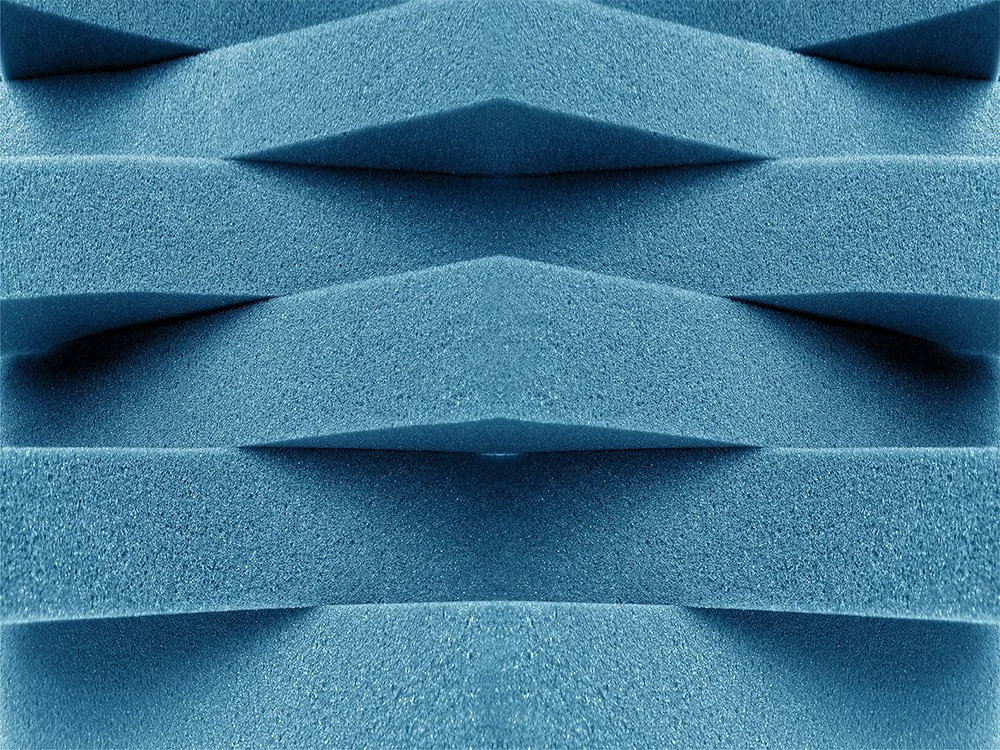
PORON®, Echocel®, and Urethane Foam for Custom Orthotics
Understanding cushioning materials, and what matters when choosing an orthotic comfort layer.
A custom orthotic brings several materials together, each serving a different purpose. The cushioning layer helps shape the underfoot experience, while the core, cover, and overall design contribute to the finished device. Understanding the material in that cushioning layer makes it easier to evaluate your options.
PORON® and Echocel® are both polyurethane foam brands. Urethane foam is the general term used for this material family. Their relationship is straightforward, but their performance depends on the specific formulation, thickness, and construction.
Check out our comparison below to see the difference between Urethane foams
Echocel®: A range of polyurethane cushioning options
Acor’s Echocel® family includes Professional, High Rebound, Impact Protection, and Slow Rebound formulations. The names reflect different priorities, including general cushioning, rebound, impact absorption, and a slower memory-like response. The family also includes Endure and Pulse medical urethanes.
Specify the grade when discussing Echocel’s properties. A statement about High Rebound should not be applied automatically to Slow Rebound or another formulation. Acor lists the reviewed Echocel grades as grindable and not heat moldable.
Urethane foam: The category behind the cushioning
In orthotic material descriptions, urethane foam generally means polyurethane foam. The label does not identify one fixed level of softness, density, rebound, or durability. A useful specification names the supplier and grade as well as the thickness.
Fastech’s custom orthotic blanks page identifies a urethane foam comfort layer in 1/16-inch and 1/8-inch options. It separately identifies a moldable thermoplastic functional core. This distinction helps explain how cushioning and structural shaping work together in the finished blank.
PORON®: Multiple cushioning responses within one brand
Rogers offers PORON® Medical polyurethane foams in soft, firm, and slow-recovery options. These open-cell materials serve different cushioning needs: soft grades provide a more yielding response, firm grades offer greater resistance, and slow-recovery grades return more gradually after compression.
PORON’s resistance to compression set is a documented feature of specific medical grades. Compression set describes residual deformation after a material has been compressed and allowed to recover. It is useful when evaluating a cushioning layer’s ability to retain thickness, but it does not establish a universal replacement interval for the finished orthotic.
What should you compare when selecting a foam?
Firmness: How much resistance does the foam offer under compression? Compression force deflection, or CFD, measures the pressure required to compress a sample by a specified amount. Density measures mass per volume; it does not independently establish firmness. Two foams of the same density can feel different.
Thickness and shoe fit: The cushioning layer is only one part of the orthotic’s total thickness. Evaluate it alongside the top cover, core, base, and available shoe space. Adding thickness may change both the feel and fit of the completed device. Fastech’s stated comfort-layer options are approximately 1.6 mm and 3.2 mm when converting 1/16 inch and 1/8 inch; use the supplier’s nominal metric dimensions when publishing product specifications.
Recovery and rebound: Consider both how quickly the foam returns to shape and how it responds to loading. High rebound and impact absorption describe different characteristics; a springier feel is not proof of better shock attenuation. Compare the exact grade’s data and evaluate the complete construction.
Retention of cushioning: Review compression-set and repeated-loading data where available. A single compression-set result does not measure every aspect of service life. Compare results only when test methods, temperature, compression, duration, and recovery conditions are compatible.
Fabrication compatibility: Confirm cutting, grinding, adhesive, lamination, and heat-exposure requirements for the specific material. A foam that tolerates a validated blank-forming process is not necessarily itself heat moldable. Follow the processing instructions for the complete blank.
How the comfort layer fits into a Fastech orthotic
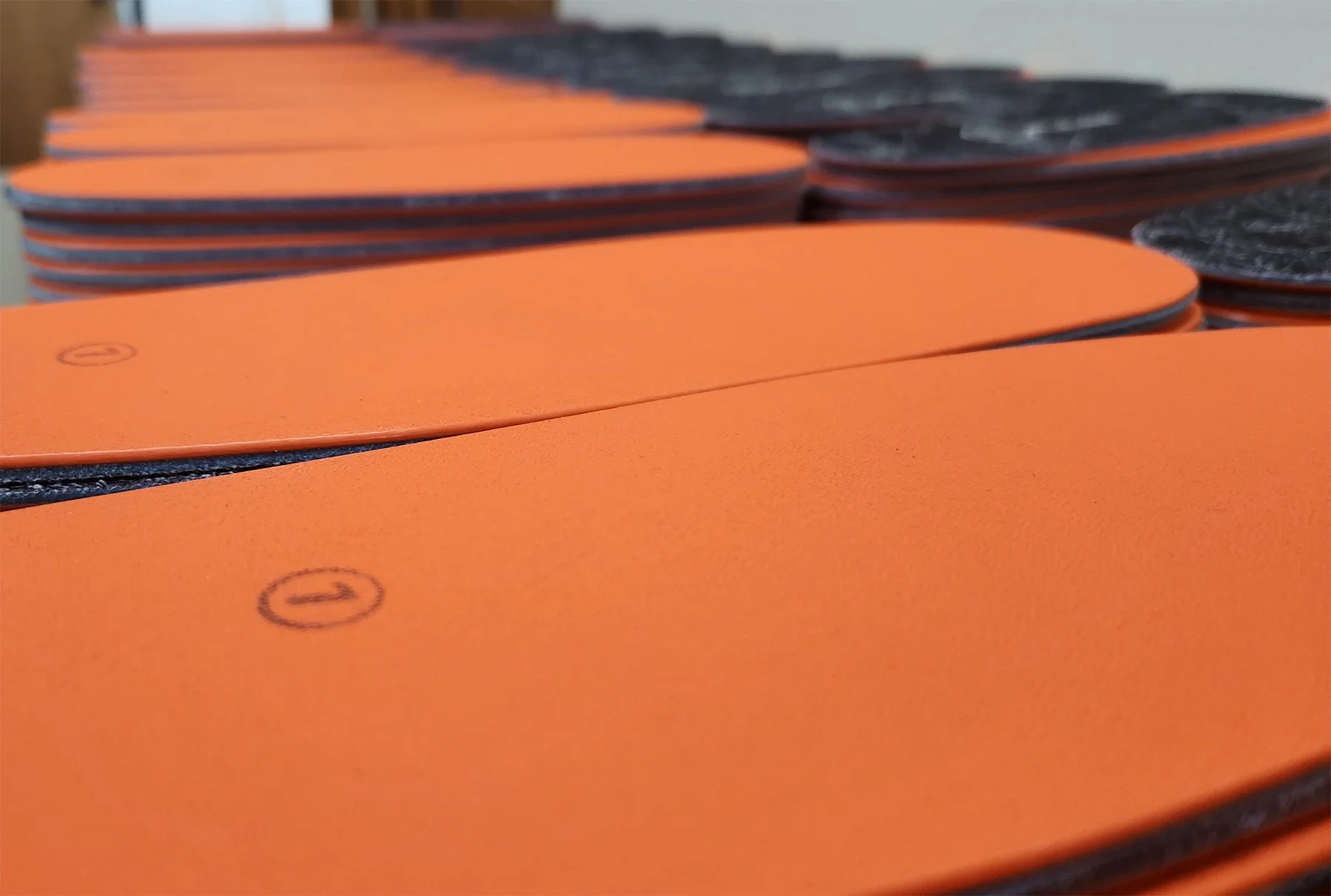
Fastech describes its blanks as four-layer constructions: a top cover, urethane foam comfort layer, moldable thermoplastic core, and base. Selecting cushioning is one part of configuring an orthotic; the functional core remains a separate component in that construction.
The practical goal is to match the full orthotic to its intended use and footwear. Evaluate the cushioning alongside the overall design, rather than choosing a material based on brand recognition or softness alone.
FAQ’s
-
PORON is a brand of polyurethane materials. Polyurethane is the broader category, so the two terms should not be treated as interchangeable product names.
-
Echocel is a branded polyurethane family. Its specific formulation distinguishes a product within the category.
-
The brand name alone cannot answer that question. Compare the selected grades, thicknesses, fabrication requirements, and performance in the intended orthotic and shoe.
-
No. Density and firmness measure different properties. Use relevant firmness data and physical samples to compare feel.
-
Do not assume it can. Acor lists the reviewed Echocel products and its listed PORON materials as not heat moldable. Fastech identifies its thermoplastic core as the moldable component. Follow the complete blank’s processing instructions.
-
No. Breathability, water absorption, and moisture transport are different properties. Verify each claim for the foam and any fabric or cover used with it.
GET STARTED WITH FASTECH
Do you have more questions?
Give us a call at 1 (800) 351-FOOT or fill out the form below.
